Showing posts with label Four Horsemen. Show all posts

Sunday, 16 June 2013

Dennett's Tools for Thinking

I find it very interesting and informative and in fact generally pleasurable to listen to philosopher, 'horseman of the apocalypse', and grand-fatherly gentleman Daniel C Dennett. 

He has a new book to sell, Intuition Pumps and Other Tools for Thinking, so we might have the enjoyment of hearing a lot of interviews.  This week I heard a good one, on the podacst Point of Inquiry.

It is a wide ranging discussion with host, Indre Viskontas, (direct link here) they mull over a wide range of interesting topics, including consciousness, the 'intentional stance' (which others call 'theory of mind'), the role of philosophy in today's world, and that old favourite, free-will.  The book gets a few mentions, but not in any sense is the interview a hard-sell.

If you have 45 minutes to spare, or can load it onto your MP3 to enjoy while you are doing something that doesn't need concentration, I recommend it highly.

Will I buy the book?  That is a different question entirely.  I would love to have time to understand Dennett's writings and have read a couple of his earlier books.  However, I have also failed to reach the end of a couple of others due to my own ability to concentrate and my preference for being active.  

Maybe I should wait for the paperback - or maybe that is where I went wrong previously as the writing gets too small.

Tuesday, 11 June 2013

What if you are wrong? (Richard Dawkins with cartoon.)

This is a nicely drawn cartoon version of the famous answer that Richard Dawkins gave to someone who asked "What if you are wrong?".

Wednesday, 20 February 2013

Richard Dawkins and Stephen Law - Think Week

On Friday 15th February as part of Oxford Think Week, Richard Dawkins and Stephen Law met on stage in the Sheldonian Theatre.

The discussion was generally an interesting revision of the sorts of things that I hear on scientific and skeptical podcasts, week in and week out, and I write about here.  A few of the audience were a little disappointed that there was nothing very new in it.

However, I can listen to these two men for a very long time without getting bored, and you have to admire their dedication to their cause.  They give up their time (and indeed money by sponsoring the event) in order to be visible to another audience - predominately of young people. 

Getting the message of rationalism and science out to the public takes a lot of effort and they show little sign of tiring.

As usual, the questions asked by the audience varied in quality.  Some were thinly veiled angry responses from a religious world-view that had clearly found itself on the back foot.  Others were more statements than questions in spite of the chair imploring people to keep their questions short.  Also as usual there were questions which were politely answered, but could have be met with simple advice to go and read a book.

Asked about objective morality and how one should address the competing requirements of different moral values we learned that RD claims to be a consequentialist.  SL agreed that he had got the description correct.  I doubt that the questioner felt satisfied with the answer that he got as he was clearly under the impression that he had deal the knock-out blow.

I for one thought it was the best answer available.

When the video of the event is posted I will link to it here.

Friday, 15 February 2013

Monopoly provides the answer to the question "What does a retired pope do next?"

In general terms this is a virtually meaningless question because most popes do not abdicate and retire.  No doubt it will be a while before we hear the real reason for the retirement of Pope Benedict, even if we ever find it out.  The Roman Catholic Church could hardly be say to be famous for its openness.

Like his brother, Pope Benedict has been accused of quite a number of misdemeanours during his professional life.  It is asserted that he has personally been responsible for covering up the nefarious child abuse activities of many Catholic priests.  Although it is not implied that he was actually involved in the rape of children, it would be regarded as a very serious crime in any civilised jurisdiction to take actions intended to impede the police in their investigation of crime.  And yet this is exactly what he has been accused of.  Aiding and abetting one criminal would be serious enough, but it if is true that Ratzinger's Congregation for the Doctrine of Faith activities have been systematically confounding law enforcement then someone should take personal responsibility for it.  That someone should clearly be the head of the organisation.

Now that Ratzinger will no longer be acting as 'The Pope', and therefore no longer the head of state of that 'non-country' called 'The Vatican', one might hope that he is getting rather worried.

Please think about that and feel some satisfaction at my optimism.

His immunity to prosecution must surely have been rescinded along with the other responsibilities of the position.

Surely, just like that other notorious European tyrant Mladic, Ratzinger should be arrested and denied bail while his alleged crimes are thoroughly investigated and he is ultimately brought to trial. 

Therefore the answer to the question of his retirement plans should come directly from the Monopoly board!

Ratzinger - 1st March - Go to Jail. Go Directly.

Go to jail.  Go directly to jail. Do not pass go. Do not collect £200 (or whatever currency or culture you prefer).

After all this is a man who should know more about morality than anyone else on Earth if the claims of his church are true.  If God really set the standards of objective morality, then the Vicar of Christ (and his older brother) should have been able to tell that it is immoral to shelter his fellow priests from justice (or whatever his older brother is accused of).

There is little evidence that they have grasped that concept yet.

Go to jail.


Update: 22:30.  This evening I attended an event in Oxford, where Stephen Law and Richard Dawkins were in discussion as part of 'Think Week'.  One of the questions from the audience was on exactly this topic.  RD has been involved in a previous discussion about an attempt to prosecute the pope and together with Christopher Hitchens had paid a top lawyer to look into the idea.  Sitting in the audience this evening and knowing that this post was scheduled I felt quite amused.

Wednesday, 23 January 2013

Stridency is the least you should muster!

Richard Dawkins sometimes seems to rejoice in the way that his critics refer to him as 'strident'.  Shortly before the death of Christopher Hitchins, Dawkins interviewed his fellow 'horseman of the apocalypse'.

He told Dawkins in the interview:

“You have a discipline in which you are very distinguished. You've educated a lot of people; nobody denies that, not even your worst enemies. You see your discipline being attacked and defamed and attempts made to drive it out.

“Stridency is the least you should muster . . . It's the shame of your colleagues that they don't form ranks and say,
‘Listen, we're going to defend our colleagues from these appalling and obfuscating elements.’”

Well said - of course!

One small thing that I can claim is that I frequently defend Dawkins against the way that he is mis-represented.  Religious family members might not like him, but they can't, in all honesty, use stridency as an excuse.

You can read more at this link.

Friday, 11 January 2013

Could Nick Cohen be the new Hitch?

At the National Secular Society's conference last September, Nick Cohen gave a rousing speech entitled "How modern blasphemy works in practice".

In his introduction he included a quote from the late Christopher Hitchens:

“Its not enough to have free speech.  People must learn to speak freely.”

The contents of his speech and accounts of his work lead me to wonder whether he might pick up the mantle that was so tragically dropped a year ago, and the following notes might help you to understand why I suggest this.

A lady had said to him that morning on his journey, “What's the point of the NSS?  You've won haven't you? We're a secular society.”

She was missing the point.  We have a de facto blasphemy law.  It has not been passed by parliament and is not enforced by courts.  It brings with it no right to be innocent until proven guilty and there is no right of appeal. Instead, it is based on the threat of violence.  There is a huge system of self-censorship which overwhelmingly hurts the country. 

Cohen often sees the fear in editors and broadcasters eyes.  If we provoke the intolerant then we put people at risk.  People have now worked hard to develop this whole theory that to insult Mohamed is to perpetrate Islamophobia when in fact it is nothing of the sort.  Those who threaten retaliation are little better than truculent children and we can't expect them to behave as Westerners.

He suggested going back through the great writers in favour of free speech.

Milton's Areopagitica, 1644, pointed out the absurdity of censorship.  What kind of person would want to be a censor?  It certainly couldn't be anyone of talent or they would want to do their own work.  On that basis, anyone who wants to be a censor is unfit to be one.

More recently, The Jewel of Medina by Sheri Jones strove mightily not to cause offence, and in her version of the story of the life of Mohamed, Jones made him tell his wife to remain with her parents until she had grown up (which probably never happened even if a real Mohamed actually did exist, for which there is absolutely no historical evidence).  The book got a $100K advance.   Then in spite of bending over backwards to avoid telling the truth she was accused of causing offence!  Publication of the book was pulled.  A professor in Texas had said “This book is an insult to Islam” so the publisher believed him.  Eventually it was released by a new publisher, whose home was subsequently fire-bombed.  The very fact that someone said the above led to fire-bombing. 

Also everyone is afraid to admit that self censorship exists.  Journalists all like to pose as dissidents in a dictatorship, challenging establishments, transgressing boundaries – normally this is nonsense.  They simply seem unable to acknowledge that certain topics are just off-limits.

One reason why the banking crash came out of the blue was that journalists knew that challenging a city institution costs a lot of money to defend.  But no journalists want to say that they and their editors are afraid of litigation.  Because we can't admit our fear we make excuses. 

Cohen wants to emphasise the importance of at least being honest about being a coward.  The language of the liberal left has been corrupted and turned on its head to accuse people of racism etc.  Many people who use this language are genuinely afraid.

(John Stuart )Mill realised that there were other ways of confronting extremism than the law.  Online public opinion is one way now.  It is not hard to beat a holocaust denier in open argument and if you can't do it you shouldn't be in the business of trying.  It is important to have your answers ready and to make people feel absurd for using silly arguments.

A few hundred years ago you would know that the finest minds in the world, such as Isaac Newton, also had supernatural beliefs as a broad explanation of the world around them.  Now that is no longer possible.  As soon as you reach some level of knowledge you will know that the greatest minds of today do not hold those unscientific views now.  Religion is no longer able to be involved in high culture.  This makes religious people defensive and wary of learning.  Religion now knows itself to be intellectually on-the-back-foot.  Instead it can become ultra-fundamentalist and aggressive.

People don't understand the point of political extremism is that there always HAS to be something to keep their supporters inflamed. 

I think it is time for me to read more of Cohen's work, but first I need to complete reading Hitchens long book of essays, "Arguably"

Saturday, 22 September 2012

Secularist stars at the NSS conference

As I mentioned earlier, I went to London today for the National Secular Society's conference.  I'll probably write more about it another day, but here's a little comment about each of the speakers.  I should say that the event was attended by nearly 800 people from a range of backgrounds - including at least one gentleman wearing a clerical collar.

Professor Ted Cantle - business-like and well informed.  Being English and male might lead some to wonder how he is qualified to comment about people who are in neither category but I found him convincing.  Multiculturalism is to be replaced by 'interculturalism'. 

Nia Griffith (Member of Parliament), neither English nor male - was an entertaining and informative speaker.  Her best anecdote (of many) was about the Human Embryology and Fertilsation Act.  Constituents were worried that "there'll be centaurs running in the streets".  [Its odd that they will not be cantering or galloping.]

Pragna Patel was more successful than I expected at involving those of us who were not 'Southall Black Sisters'.  [I suppose I'm a little wary of positive discrimination or something - but being white, English and male, I hope you might make allowances for that . . . please?]  Speaking of minority groups who seek favours from the state she said "They use the language of human rights but actually seek to suppress it."  This was echoed by most of the following speakers.  Excellent points throughout the speech and good answers to questions.

Nick Cohen's brilliant speech was one of the highlights of the day.  He acknowledged that journalists and broadcasters were afraid to admit that self-censorship exists.  All like to pose as dissidents in a dictatorship, challenging establishments, transgressing boundaries, but they can't acknowledge that certain topics are just off limits.  He added that 200 years ago you would know that the finest minds in the world also had supernatural beliefs as a broad explanation of the world. Now that is no longer possible.  As soon as you reach some level of knowledge you will know that the greatest minds in the world do not hold supernatural beliefs now.  Religion is no longer able to be involved in high culture.  This makes people defensive and wary of learning.  Religion now knows itself to be intellectually on the back foot.

Maryam Namazie was next but I'll come back to her later.

Peter Tatchell delivered a fine speech as usual.  He emphasised that the enemy was organised faith itself, not necessarily the faithful people.  The clerics are the main threat and it is time we said so.  Afterwards someone commented that he had foundered a little when questioned about the ordinary faithful essentially lending support to the religious leaders, and about funding for improvements to human rights.  I think that was a reasonable assessment.

Richard Dawkins came last - I can listen to him any time.  He was advertised as the keynote speaker for very obvious reasons.  The first half of his talk was excellent, with comments on dealing with potentially violent people "I fear you because you are mad but don't confuse fear with respect."  Actually telling people that they are "behaving like a spoilt brat having a temper tantrum" might not be the best advice.  He spent some time on American politics, obviously with the impending election in mind.  Christian scriptures are genuinely ancient. The Book of Mormon is not ancient but ludicrously anachronistic [and he explained why, in some detail, and with great wit]. Many of the core beliefs are measurably more preposterous than claims of Christianity.  At least it is arguable that Jesus existed. All of that was delivered with his usual verbal dexterity.  The less I say about the second half of the speech, his confusing satire about Tony Blair, the better, but Richard is not a stand-up comedian by profession.

Now back to the real star of the show.  It is clear why Dawkins was the keynote speaker, but the only one of the day to get a standing ovation, along with the longest applause, was Maryam Namazie.  Her speech was exactly what you would expect from her, and on the basis of the four times that I have heard her, she delivers it to the same high standard every time she speaks.  She combines a passion for justice with a deep understanding and knowledge of the subject.  It will be hard to do justice to her but in a few days I will write more about what she said.

Aside from that - it was a great day out and I met a lot of very interesting people who had travelled much further than I had to attend.  Hello to anyone among them who is reading this.  I expect all my readers to try to attend next year if geographically feasible.  Thanks to Terry Sanderson and crew for organising it all at a very reasonable price and reaching out to so many people.

Small note: published hurriedly on the day of the event.  Please forgive the larger number of typos than usual.

Update!  Most of the talks have now appeared on the Pod Delusion Extra site - although at the time of writing (2012-09-30) the best one is still awaiting permission.  Hopefully we can all hear the words of Maryam Namazie soon.


Tuesday, 11 September 2012

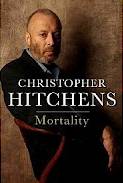
Hitchens 'Mortality'

A month or two ago I pre-ordered Christopher Hitchens' last book, Mortality, with a little trepidation.  I didn't really want to read the dying words of a great orator and writer, but nor did I want to miss any of the things that he had to say.

A few days ago, my copy of this giant little book arrived, and today I have finished reading it, leaving me feeling . . . I'm not sure how.  It is only 104 pages long but it is packed with insights into his life in Tumortown, as he called it.

Mortality, by Christopher Hitchens
Mortality,
by Christopher Hitchens

It is a little fragmentary, sometimes repetitive and even trivially inconsistent, (e.g. Tumortown being renamed Tumorville).  But considering the huge difficulties he experienced with communication while undergoing treatment for his cancer, I find it amazing that it makes such sense  I can't aspire to be half the writer that he was, even when he was in this weakened state.

The final chapter containing his own words was a collection of fragmentary jottings.  Perhaps my favorite was:

Now so many tributes that it also seems that rumours of my LIFE have also been greatly exaggerated.  Lived to see most of what is going to be written about me: this too is exhilarating but hits diminishing returns when I realize how soon it, too, will be "background".

and I also like this one

If I convert it's because it's better that a believer dies than that an atheist does.

The final chapter is written by his wife, Carol Blue.  I couldn't read that again.  I recognised the first few paragraphs from an article I read recently online.  It is odd that such glowing, affectionate and passionate words made me feel a bit melancholy.

If you admired the man, you should read this book.

Monday, 23 July 2012

Is Evolution Predictable? Richard Dawkins speaks.

You may like to view this newly published video of the talk given by Professor Richard Dawkins at Culham Science Centre in February 2012.  The narrative is quite close to that in his book, Climbing Mount Improbable, but it was a pleasure to hear him speak on the subject.  If you like it too, buy the book.


Small reminder to self:  I promised to write an article about fusion for his web site! Perhaps next week while I'm on holiday I'll do it.

Tuesday, 26 June 2012

The softest down imaginable

It is said (by Sam Harris, in his Letter to a Christian Nation which I wrote about recently) that former leader of North Korea, Kim Il Sung was very demanding about his sleeping arrangements.  He required that his bed should be at exactly 500m above sea level (which must have made him sea-sick if there is much of a tide in N Korea) and that his mattresses be filled with 'the softest down imaginable'.


Kim Il Sung liked a soft bed made of down
from the throats of sparrows.  (Image from here)
Apparently the 'softest down imaginable' comes from the throat of a sparrow.

To fill each mattress, the down of 700,000 sparrows is needed.  Since he had several residences, it would be surprising if the population of sparrows in the country was not somewhat affected.

As Harris goes on to say:

Tyrants who orchestrate genocides, or who happily preside over the starvation of their own people, also tend to be profoundly idiosyncratic men, not champions of reason.

Friday, 22 June 2012

Pretending to know things that you don't know!

During an interesting interview on the new podcast, the Malcontents Gambit (43 minutes that I highly recommend) Peter Boghossian spoke in his usual clear and convincing way.

Discussions on the subject of faith require a clear definition of the terminology, and Boghossian has proposed a solution to this problem, which appears to clarify things rather well.  If you haven't come across Boghossian (and he does suddenly seem to be coming very much to the notice of the rational thinking community now) then you should Google for some of his work or see the links in the previous post.

Peter Boghossian - knowing things that
he can know

His definition of faith is "pretending to know things that you don't know".  Just substituting these words in a sentence often makes an obscure theological or doctrinal question turn into a clearly defined problem with a simple solution.

For example, when asked whether it is possible to have a meaningful and purposeful life without faith, he suggests that the question should be re-phrased by substituting his definition of the word faith.  The question then becomes "Is it possible to have a meaningful and purposeful life without pretending to know things that you don't know".  Surely the answer is then obvious.

Boghossian claims - I think rightly - that there are almost no situations where the word 'faith' needs to be invoked in the English language.  All too often the concept of faith is confused with hope, which is an entirely different thing.  People also tend to use faith as a system of epistemology - i.e. a system for the study of knowledge.  He suggests that the faithful have no right to claim that they have anything to offer on this topic.

When challenged that relying on the scientific method is the same as relying on faith, he quoted a martial arts friend, Matt Thornton, who insists that this is 'like suggesting that abstinence is a sexual position'.

Humanity's technological progress is solely attributable to recognition of the existence of external reality - not a faith.

The 'problem of induction' is often thrown out by proponents of faith.  They suggest that you have to have faith in order to believe that the sun will rise tomorrow.  Going back to the definition of faith helps with this though.  We do know why the sun appears to rise.  It is a simple matter of celestial mechanics and it would be very surprising if this changed overnight.  Faith does not come into the matter.

Truth matters because it enables us to make our lives better, improve life in our communities and promote better justice.  In fact, if you do not value objective truth, then the thing that you are valuing is arbitrary.  That is part of the problem of faith.  Indeed, even just having faith is a form of injustice to yourself.

Antagonistically, but quite sensibly, he criticises people who make claims about what will happen to them after death, and especially about what will happen to him.  He suggests that anyone who tells you that you will go to hell shouldn't be allowed to have any form of adult responsibility.  Maybe they should be allowed to write fiction, but not to do anything where rational decisions are needed.

There are four impediments to rational thought:
1/  Subjectivity and objectivity are too often confused.
2/  The definition of faith is not clear enough, and faith is too often confused with hope.
3/  Confirmation bias plays too large a role.
4/  Belief in belief - people tend to think that it is good to believe in something rather than nothing.

In feedback that he has received so far, he notes that people almost never say "Look, you're wrong and here's why" but almost always they will tell him that the bible says something different.  Almost all the e-mails he receives are an unsophisticated form of confirmation bias.


Amusingly, he also proposed that Gene Roddenberry's eponymous Mr Spock (in Star Trek, as you know) might actually have done damage to the cause of rational thinking.  By making Spock a character who has no emotions, there is a danger of people associating that quality with all rationalists.  Surely that is not something we would want, but setting that desire aside, Michael Schermer's book, The Believing Brain seems to shed light on the issue.  The hypothesis that we make our decisions and develop our beliefs emotionally, and then use our conscious powers to back them up rationally, is now very well supported.

He says that almost every moment of his waking day is spent discussing these things.  Interestingly he makes the surprising and refreshing claim that every single person in the world can be reached by rationality.  Personally he believes that the best way to reach difficult people is to be incredibly blunt and honest with them - as Richard Dawkins is.  He also suggests that you should never allow an argument to be shut down by someone claiming to offended.  As he says, "Your offence means nothing to me".

He finds that evangelical fundamentalists are easier to talk to than mushy moderates.  These are the sort of people that you can have a beer with!

Let's hope for more gems like this!


Related posts:
Introduction: Elect the fourth horseman - some candidates!
One from yesterday: Elect the fourth horseman - some candidates!
And from earlier this evening:  Boghossian leads by a mile

Boghossian leads by a mile

I'm not just surprised, but truly amazed at the level of interest in my slightly frivolous post yesterday about electing a putative replacement 4th Horseman as a mark of respect to Christopher Hitchens.  Thanks for all the comments.

Even more amazing was the consensus of opinion.  I feel myself slightly worried now.  To quote a famous author

Whenever you find you are on the side of the majority, it is time to pause and reflect. -- Mark Twain

Even while I was putting together the picture that I featured, I had in mind my own favourite candidate, a relative newcomer to the scene, whose work has been impressing me.  Nothing could have prepared me for the level of agreement in your comments.  I didn't even do much to lead the audience.

You can see from this bar chart what I mean.

Peter Boghossian leads the race - by quite a margin!

Many of my readers might not be familiar with Boghossian's work, but the results suggest that you should expect to see much more of him soon.

Shortly I will post an article about one of his recent interviews, Pretending to know things that you don't know!   Meanwhile here are the links to a couple of his videos. If you are aware of any others, please post links in the comments.

Jesus, the Easter Bunny, and Other Delusions earlier this year.  (35 minutes.)

Faith: Pretending to know things you don't know, May 6th 2012 (37 minutes)


Thursday, 21 June 2012

Elect the fourth horseman - some candidates!

In yesterday's post I introduced the idea that it might be time to 'elect' a new fourth horseman, who who have the tough task of replacing Hitch. It would be difficult.  To quote one of the remaining three:

Hitch had more wit and style than a few civilisations that I could name! -- Sam Harris.

The role might be one like that of Paul in the New Testament - not there at the beginning but amazingly influential in the progress of his cause. 

Who might we have on the candidates list?

Elect the 4th Horseman's substitute

These are the names that I could suggest, listed in strict alphabetical surname order (although not in the same order in this picture).  All of these people have strengths as great as Hitch's, albeit in different areas.

Ayaan Hirsi Ali, Dan Barker, Peter Boghossian, Jerry Coyne, Brian Dalton (Mr Deity), Matt Dillahunty, Sean Faircloth, Penn Jillette, A C Grayling, Paula Kirby, Lawrence Krauss, Pee Zee Myers, Maryam Namazie, Steve Novella, Aron Ra, James Randi, Michael Schermer, Eugenie Scott, Victor Stenger, Neil deGrasse Tyson.

I'm sure there are many others.  Add your suggestions in the comments, which are allowed to be anonymous if you prefer.


Small note: Nobody called Rebecca is on the list!


Related Posts:
Introduction: Elect the fourth horseman - some candidates!
Initial results of the responses:  Boghossian leads by a mile!
Some of Boghossian's work summarised: Pretending to know things that you don't know!
And one from yesterday: Could anyone ever replace Hitch?

Wednesday, 20 June 2012

Could anyone ever replace Hitch?

With the sad demise of Christopher Hitchens last December, I have been wondering whether anyone else might be 'elected' to the honorary position of '4th Horseman of the Apocalypse', joining Richard Dawkins, Daniel Dennett, Sam Harris.  In fact, I have been wondering whether anyone ever could replace him and who might be qualified to decide anyway.  Is it a democratic vote?  Is it another opportunity for the diverse rational community to be split again? (Or are we lucky enough to find that Rebecca Watson is too busy in her other campaigns of self-publicity to bother herself about this one)?

Three remaining 'horseman',
with worthy guest, Ayaan Hirsi Ali from here.
On Sunday I gave you this link to an excellent Youtube video of Ayaan Hirsi Ali on stage with the remaining three 'horsemen' at the 2012 Global Atheist Convention, 13-15th April, in the Melbourne Convention Exhibition Centre.

Although I know I'm not in a position to have any credible effect on this topic, I am going to indulge myself in a little speculation about the possible candidates.  I can only work from my own limited experience, but I will give a 'shout out' to some of the people who have most influenced my thinking over the last couple of years.

That the original horsemen are firmly on my list goes without saying.  If that were not the case I would not be writing this.

What criteria are important in this selection though?
  • Do the existing three have to approve the selection, or indeed make the selection themselves?  (I'm sure they would want to influence the choice).
  • Is it necessary for the 4th horseman to be a man?  (A tricky, potentially divisive question!  I vote for equality, and against positive discrimination.)
  • Do they have to be white?  (Let's hope that is neither a requirement, nor a reason for positive discrimination.)
  • Must they be an English-speaker?  (I think the answer is yes, in this case, but accept that English need not be their first language.)
  • Should the selection be based on their profession or their performance?  (It would be hard to find another well-read polemicist and commentator like Hitch, but all to easy to select another philosopher to join two of the remaining three.  The trouble is that that might tip the balance too far from the real world.)
  • Indeed should we ban scientists and philosophers from consideration, in favour of an unbiased and well-practised communicator? (I hope not.)
  • Do they necessarily have to be an atheist?  (I think the answer is yes, but . . . what do you think?  e.g. the deist, Thomas Paine, could easily have been a candidate if he was still alive.)
  • Or does nobody care?  (Its quite possible!) 
In the next post, Elect the fourth horseman - some candidates, I will venture to suggest the names of some candidates and invite you to suggest others who I ought to find out about.  If nothing else, we might all learn about the work of some of the stars of freethought who we didn't already know.


Related Posts: 
Next post: Elect the fourth horseman - some candidates!  (Huge number of comments with a clear consensus.)
Initial results of the responses:  Boghossian leads by a mile!
Some of Boghossian's work summarised: Pretending to know things that you don't know!